Solar panels have become key players in renewable energy production, combining energy efficiency with environmental awareness. As we approach 2025, the need to invest in sustainable solutions becomes crucial. Before committing to the installation of photovoltaic panels, the question of dimensions inevitably arises. It is not just a matter of aesthetics, but also of functionality and efficiency. Understanding how these dimensions impact energy production is essential to optimize your investment. This guide aims to explore the different formats of solar panels, their characteristics, and the determining criteria for making the ideal choice according to your needs.
The different sizes of photovoltaic panels
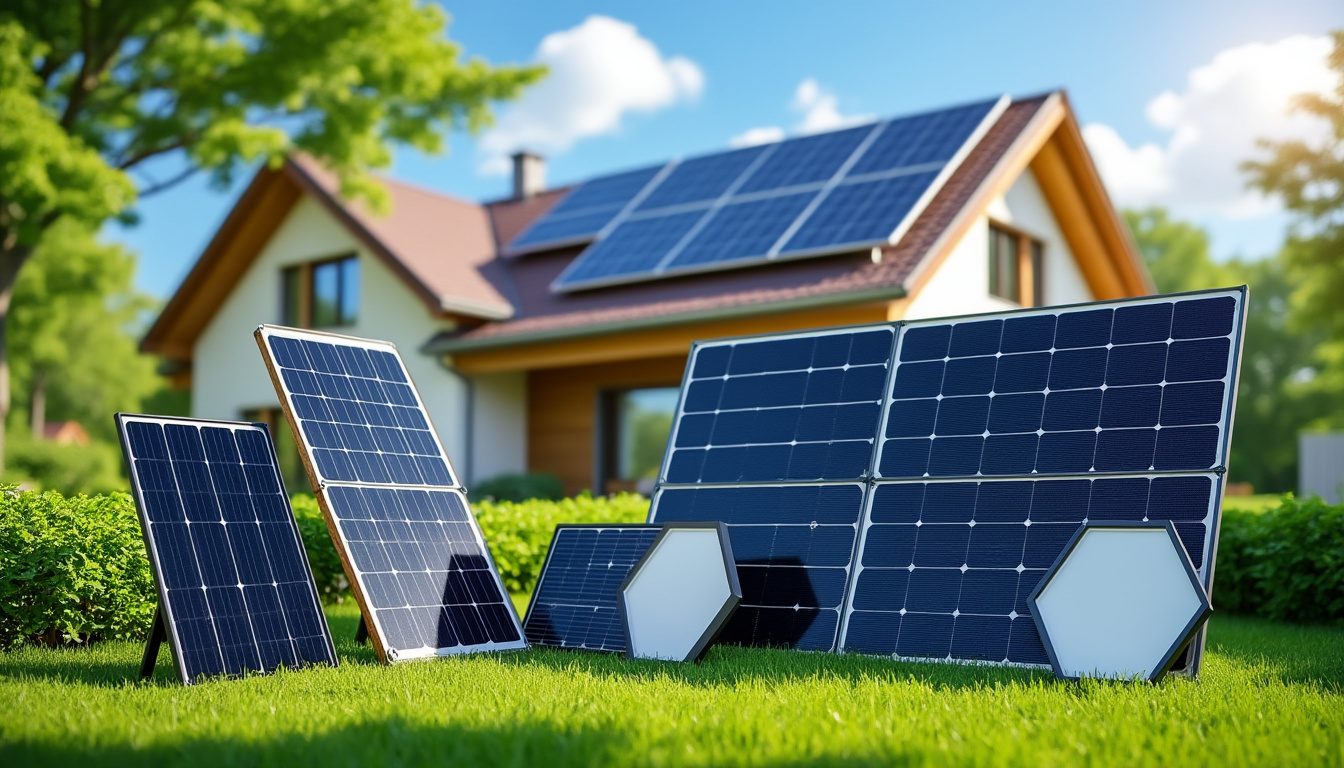
When it comes to photovoltaic panels, sizes vary based on several factors such as technology, power, and the specific application envisioned. Generally speaking, three main categories of formats stand out, each offering unique advantages. It is important to develop these different formats thoroughly to ensure the right choice based on energy needs and the space available for installation.
The first category includes compact solutions, ideal for limited spaces. These small panels, often used in specific applications like camping or beach setups, typically measure around 120 x 60 cm. While they are easy to transport and install, their power is generally lower than that of standard formats, requiring several units to meet a significant energy need.
The standard formats make up the second category, the most common for residential installations. These panels usually measure between 160 and 170 cm in length and 90 to 110 cm in width. Their size allows them to achieve a power output of 300 to 450 W. This is the preferred choice for households seeking a good compromise between cost, efficiency, and space. Indeed, their wide availability on the market makes them easily accessible at an affordable price.
Finally, the large format units are designed for industrial and commercial installations. The dimensions of these panels can reach up to 200 x 110 cm, or even more. Their main advantage lies in reducing the number of modules needed to achieve a high power output, which optimizes space in large installations. However, these panels require a robust support structure and involve higher initial costs, both for purchase and installation.
| Panel Type | Dimensions (cm) | Power (W) | Usage |
|---|---|---|---|
| Compact | 120 x 60 | 100 – 150 | Camping, small spaces |
| Standard | 160 – 170 x 90 – 110 | 300 – 450 | Residential |
| Large format | 200 and more | 500+ | Commercial, industrial |
The choice between these different sizes is not as simple as it seems. Several factors must be taken into account, such as the available space, the specific energy needs of the user, and the budget allocated for the investment. For instance, a residential self-consumption project will often require standard panels, while a large-scale commercial installation will likely choose the widest formats. To establish a good balance between cost and efficiency, it is imperative to analyze these variables in depth.
Compact solutions for restricted spaces
Small photovoltaic panels present themselves as an ideal solution for those with little space to dedicate to solar energy. Let’s examine their features in detail. Firstly, these compact modules offer dimensions that make them practical for use on limited surfaces such as balconies and boats. For example, a 120 x 60 cm panel is perfect for equipping a camper van, allowing for electricity production even outside of homes.
However, it is crucial to note that their size is directly correlated with their power. The power of these small modules usually ranges between 100 and 150 W. This means that several will be needed to cover significant energy needs. Indeed, a standard residential installation requiring between 3 to 6 kW could need up to 50 compact panels, a factor that must be carefully evaluated against the costs of purchase and installation.
- Advantages: Easy installation, portability, low initial cost.
- Disadvantages: Limited power, requires a high number of modules.
Standard formats: a popular solution for residential use
Standard photovoltaic panels are the most common choice for residential installations, and for good reasons. Suitable for medium-sized roofs, these panels typically measure between 160 and 170 cm in length and 90 to 110 cm in width. Their production capacity ranges between 300 and 450 W, thus covering a reasonable portion of household energy needs. Indeed, a single standard panel can produce between 400 and 550 kilowatt-hours per year, under optimal conditions.
One of the major advantages of this format is its availability on the market. Suppliers such as Leroy Merlin and other specialized distributors offer a wide selection of standard panels at competitive prices. Additionally, manufacturers such as Sunpower and Photowatt provide high-quality modules, ensuring efficiency and durability.
| Brand | Model | Power (W) | Dimension (cm) |
|---|---|---|---|
| Sunpower | Maxeon 6 | 400 | 170 x 100 |
| Photowatt | Poly Panel 340 | 340 | 165 x 99 |
| Systovi | Standard Panel 230 | 230 | 162 x 98 |
Despite its advantages, the use of standard panels also requires consideration of the space available on the roof. In situations where the area is limited, it is essential to select panels with particularly high efficiency. Modern technologies, such as monocrystalline panels, allow for space optimization while ensuring maximum energy production. These space and efficiency considerations must be carefully evaluated when selecting the appropriate format.
Large format units: for commercial and industrial installations
The last category, the largest, concerns large format units, primarily intended for commercial and industrial installations. With dimensions typically exceeding 200 x 110 cm, these panels can achieve impressive powers, often exceeding 500 W. This type of panel is particularly suited to maximize energy production over large available surfaces.
One of the main advantages of large format panels is that they allow for a reduction in the total number of modules needed. This presents an economic interest, as it not only reduces installation costs but also, by extension, wiring expenses. However, their size also requires strengthening of the support structures, and their initial cost can be a barrier for some companies.
- Advantages: Optimization of space, profitability on large surfaces, reduction of installation costs per module.
- Disadvantages: High initial cost, need for robust support structures.
| Panel Type | Dimensions (cm) | Power (W) | Usage |
|---|---|---|---|
| Large format | 200 x 110 | 500+ | Commercial, industrial |
| Ultra-large format | 240 x 120 | 600+ | Large installations |
How to choose the right size for a photovoltaic panel
Choosing a solar panel is not simply limited to size or power output. It also involves considering a range of factors, including available space, heating needs, and of course, budget. Each project is unique and requires a customized approach to ensure optimal efficiency.
To begin, it is crucial to assess the available space. If the roof or installation surface is limited, it is preferable to combine a standard high-efficiency panel. When space is not an issue, choosing large format panels may be an advantageous solution, as it reduces the number of modules required.
Next, the energy needs must be clearly identified. On average, a residential installation ranges between 3 and 6 kW, while commercial installations can exceed 50 kW. In this context, opting for standard formats would make sense for a home, while large formats would be essential for a business. Contextualizing these needs ensures proper sizing according to the desired project type.
| Criteria | Description | Impact on the choice |
|---|---|---|
| Available space | Roof or installation surface | Determines the size and number of panels |
| Energy need | Power required for supply | Affects the format if it is necessary to favor several small panels or a few large ones |
| Budget | Amount allocated for installation | Influences the choice of panel type and format |
Power and efficiency: the impact of panel size
Aside from physical dimensions, the nominal power of the panels, measured in watts (W), is crucial for evaluating options. Small panels, with a surface area less than one square meter, exhibit a power range between 100 and 150 W. Perfectly suited for portable and off-grid applications, they will, however, be less effective in a residential setting.
For standard configurations, the panels reach significantly higher power, typically ranging from 300 to 450 W. It should be noted that larger panels, such as those intended for industrial installations, can exceed 500 W, making electricity production more efficient by minimizing the number of modules required.
- Compact panels: 100-150 W, suitable for portable use.
- Standard panels: 300-450 W, ideal for residential use.
- Large format panels: 500 W and more, designed for commercial use.
| Panel Type | Power (W) | Usage |
|---|---|---|
| Compact panels | 100-150 | Portable |
| Standard panels | 300-450 | Residential |
| Large format panels | 500+ | Commercial |
FAQ about the dimensions of solar panels
What is the optimal size for a solar panel for a house?
The optimal size for a house depends on the available area and energy needs, but standard panels measuring around 170 x 100 cm are often recommended.
How does the size of the panels influence their performance?
A larger panel will generally have a greater surface area exposed to the sun, resulting in increased electricity production, although the effectiveness of the technology used is also a determining factor.
Can solar panels be installed on a balcony?
Yes, compact solutions suitable for restricted spaces exist and are ideal for installations on balconies, caravans, or boats.
Are large format panels more reliable?
Large format panels can provide better energy production on adequate surfaces but require a higher initial investment and a solid structural support.
Does the choice of brand influence the quality of the panels?
Yes, the brand can have a significant impact on the quality and efficiency of the panels, and companies like Voltalia and ENGIE are known for their cutting-edge technologies.