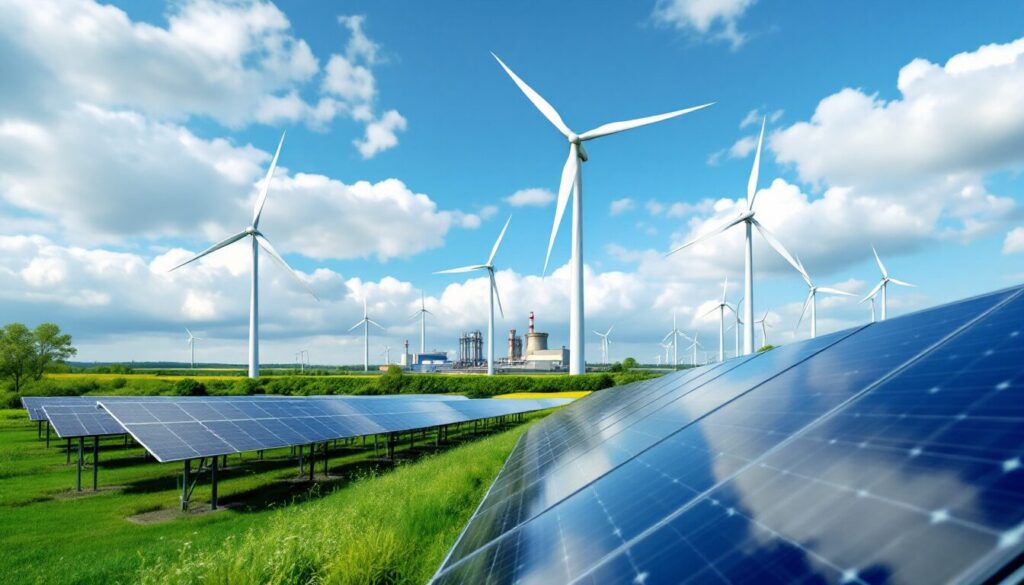
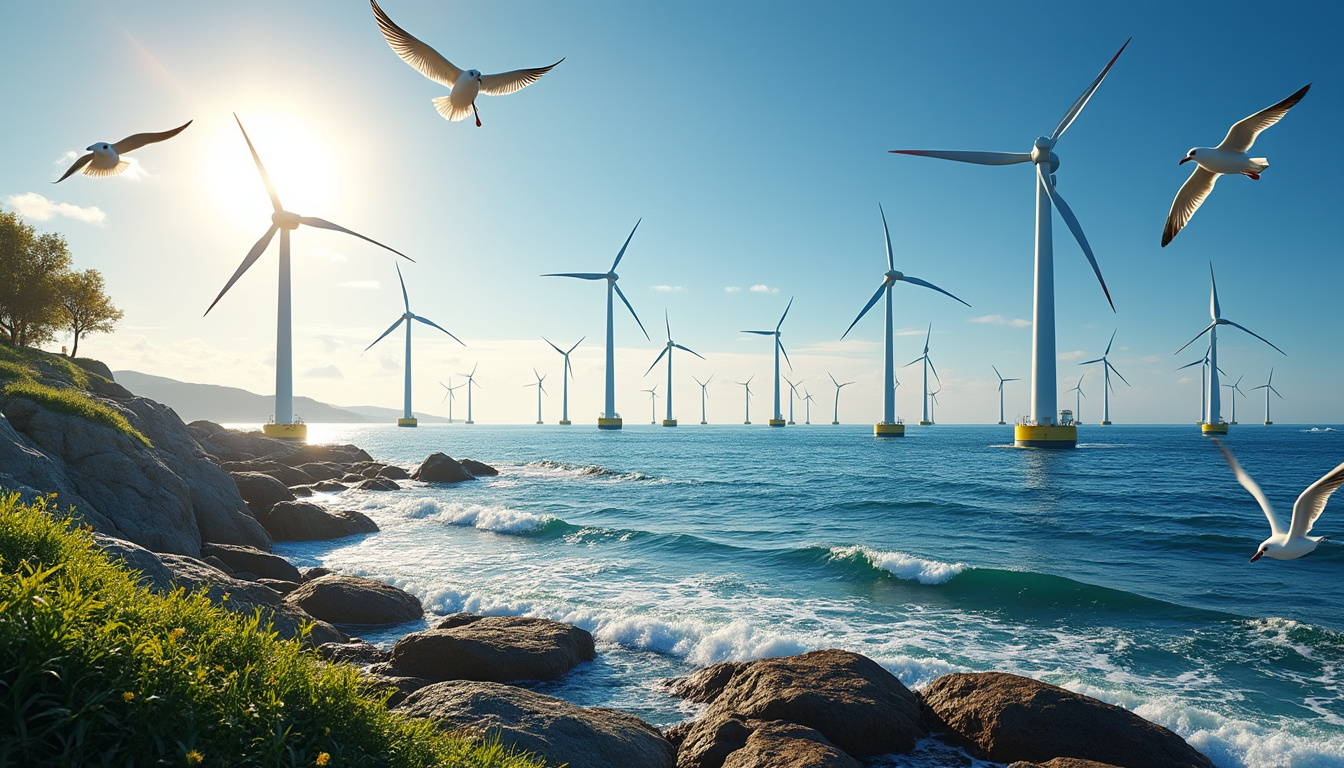
In a context where the energy transition is becoming a priority, the New Aquitaine region is resolutely committed to the development of a regional floating wind industry. This initiative, launched in mid-April, aims to position the region as a key player in the renewable energy sector. Economic stakeholders, local authorities, and the State are collaborating to implement an ambitious plan that could transform the energy landscape of France by 2050.
- The goal of the initiative: to build around fifty offshore parks
- Strategic partnerships with leading companies such as GE Renewable Energy and TotalEnergies
- Concrete projects in preparation with a planned capacity of 7 GW
- Regional stakeholders mobilized to support innovation and technology
The Challenges of Floating Wind in New Aquitaine
Floating wind represents a real opportunity for the New Aquitaine region. With its coasts open to the Atlantic, the region has ideal conditions for developing this technology. Floating wind allows for the installation of wind turbines in deep waters, in areas where wind conditions are more consistent and powerful. Furthermore, these installations are less visible from the coast, which can reduce local opposition. The stakes are multiple: economic, environmental, and technological.
A Growing Sector
France has set ambitious goals regarding renewable energies. The national plan aims to reach 45 GW of offshore wind by 2050, with 7 GW located off the New Aquitaine coast. To achieve these objectives, several parks are already being considered, such as Olron 1, Olron 2, and other projects off the coast of the Bay of Biscay. These projects are expected to generate thousands of jobs and support the growth of a new regional industry.
| Park | Power (GW) | Status | Expected commissioning year |
|---|---|---|---|
| Olron 1 | 1.0 | In development | 2027 |
| Olron 2 | 1.2 | In development | 2028 |
| Bay of Biscay | 3.0 | Under study | 2030 |
The Environmental Benefits
The transition to floating wind is not limited to an improvement in energy performance. It also promises a significant reduction in greenhouse gas emissions, thereby contributing to the fight against climate change. For example, floating wind generates clean energy without the need for fossil fuels. This reduces France’s energy dependence and helps to achieve the climate targets set by the European Union.
Moreover, the advanced technologies used in these floating parks, such as those developed by Alstom or DCNS, ensure a harmonious integration with the marine environment. Research continues to improve these systems, particularly by integrating innovative materials supplied by companies like Coriolis Composites.
The Industrial Ecosystem in Synergy
The regional dynamics around floating wind relies on a well-established industrial ecosystem. Major players like EDF Energies Nouvelles, GE Renewable Energy, and Boralex are partnering with innovative start-ups to develop this market.
Strategic Partnerships
These partnerships enable acceleration of innovation and reduction of production costs. For example, the integration of solutions from local research actors facilitates the scaling up of projects. Companies, such as IDN Offshore and Nautical, are also positioning themselves as major players to meet the specific needs of these offshore installations.
- Collaboration with universities and research centers
- Professional training on new technologies
- Integration of eco-friendly solutions for energy production
- Development of logistics for installation and maintenance at sea
The Jobs of Tomorrow
In terms of economic impacts, forecasts are promising. The implementation of these projects is expected to create thousands of direct and indirect jobs. Careers in engineering, construction, operation, and maintenance will become increasingly sought after. Moreover, training programs will be established to equip the workforce with the specific skills required for these sectors.
| Professions | Anticipated impact on employment | Type of training |
|---|---|---|
| Wind engineer | 1000 positions | University / Specialized school |
| Maintenance technician | 500 positions | Apprenticeship / Continuing education |
| Logistics and transport | 300 positions | Vocational training |
The Challenges Ahead
Despite advances, the path toward developing floating wind in New Aquitaine is not without challenges. Regulatory obstacles, environmental concerns, and economic aspects are all factors to consider.
Environmental Impacts to Assess
Environmental impact studies must be conducted rigorously to ensure that these projects do not harm marine life. Consulting stakeholders, including fishermen and local residents, is essential to ensure the social acceptability of these installations. By successfully integrating these concerns into the development process, the region can move forward with a sustainability approach.
- Assessment of impacts on marine fauna 🦈
- Dialogue with local actors 🤝
- Risk management related to offshore installation 🚧
- Post-installation monitoring of marine ecosystems 🌊
These challenges, while complex, also offer the opportunity to build an innovative approach to sustainable development, thus fostering a harmonious coexistence between economic activities and environmental preservation.
Economic and Technical Stakes
The economic stakes must also be anticipated. Competition in the renewable energy market is becoming increasingly fierce. Thus, optimization of production costs and energy production technologies is crucial to ensure the competitiveness of regional players against sector giants.
| Criteria | Current State | 2025 Objectives |
|---|---|---|
| Production cost per MWh | 80 € | 60 € |
| Market share of floating wind | 5% | 20% |
| Total investment in projects | 1 billion euros | 3 billion euros |
New Aquitaine at the Forefront of Innovation
To maintain its leading role in the development of floating wind, New Aquitaine is heavily investing in innovation. This involves collaboration between businesses, researchers, and public authorities to develop ever more effective and environmentally friendly solutions.
Technological Innovations
Innovation in the floating wind sector not only pertains to the turbines themselves but also includes the materials used, maintenance systems, and transportation methods. For example, the use of innovative composite materials, such as those supplied by Coriolis Composites, increases the durability of installations.
- Lightweight and durable materials 💪
- Monitoring systems and predictive maintenance 🔍
- Use of drones for aerial inspections 🚁
Research and Development
Research initiatives are also being established in universities and specialized institutes to encourage the emergence of new ideas. Research projects involve local partners, creating an environment conducive to innovation. Collaborations can take various forms, whether through co-development of technologies or joint research programs.
These efforts reflect a strong commitment from the actors of New Aquitaine regarding innovation, allowing the region to stay ahead of its competitors.
FAQ
1. What is floating wind?
Floating wind refers to wind turbines installed at sea, anchored to the seabed by floating systems. This allows the exploitation of maritime areas where fixed wind turbines would not be viable.
2. Who are the main players in floating wind in New Aquitaine?
The main players include GE Renewable Energy, TotalEnergies, and other local specialized companies such as IDN Offshore and Coriolis Composites.
3. What are the environmental benefits of floating wind?
The benefits include the reduction of greenhouse gas emissions, preservation of the environment by avoiding the use of fossil resources, and less visual intrusion from the coast.
4. How will floating wind impact the local economy?
The development of floating wind is expected to create thousands of jobs, support innovation, and stimulate the region’s economic sector through new investments.
5. What projects are currently underway in New Aquitaine?
Currently, several projects are underway, including Olron 1 and Olron 2, which are expected to be operational by 2027 and 2028, respectively.