At a time when the climate emergency is at the heart of concerns, enthusiasm for renewable energies reaches its peak. However, when the project to install 70,000 solar panels threatens the beauty of a preserved landscape, the debate becomes heated. In several municipalities in France, such as Versigny in Oise, citizens and associations are coming together to wage a fierce struggle against what they consider an infringement on their quality of life. A deep dive into this mobilization that reveals ecological, social, and economic issues of paramount importance.
Civil Mobilizations: When Landscape Protection Becomes Urgent
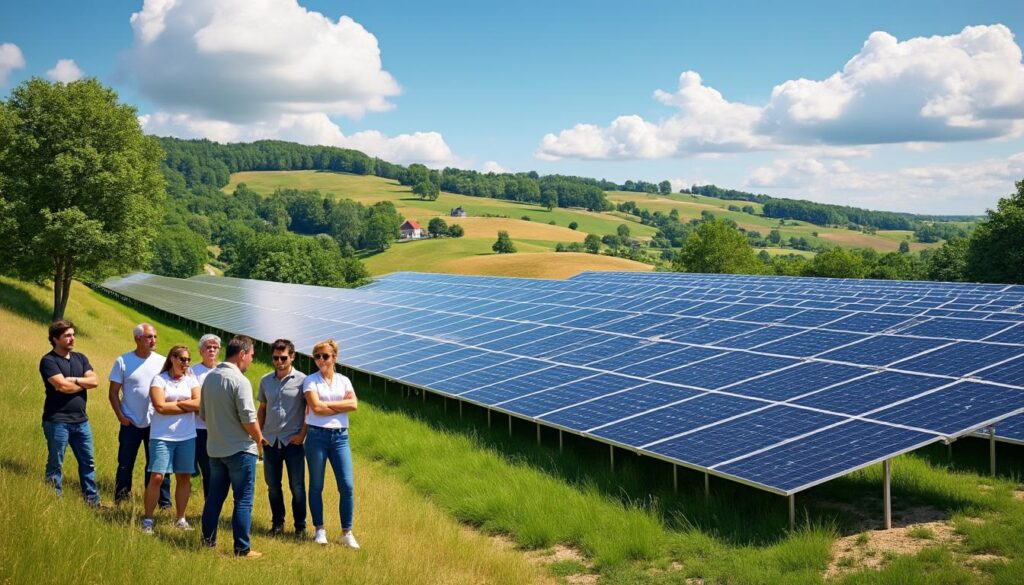
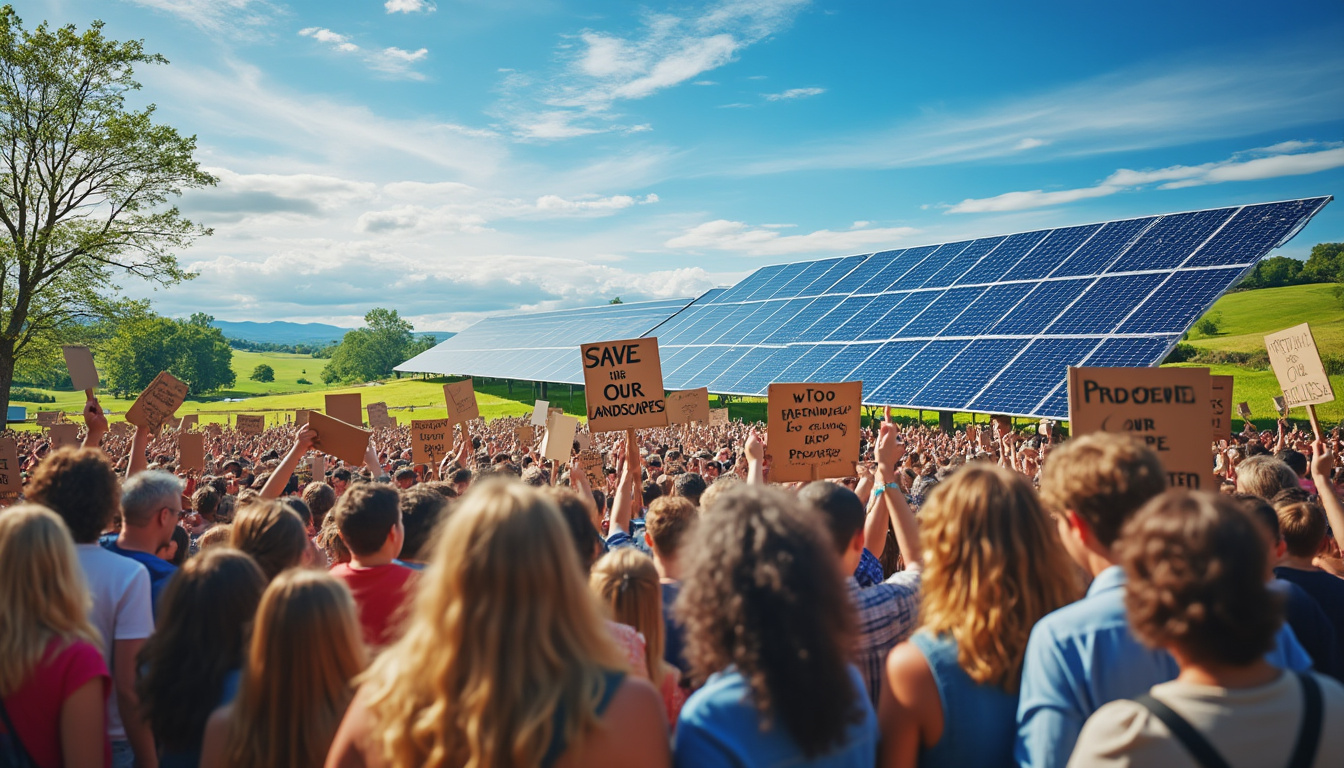
The mobilization of citizens is illustrated through concrete and organized actions. In Versigny, the collective, supported by several ecological associations, has highlighted concerns that transcend aesthetic aspects. The agrivoltaic farm project on 52 hectares, approved by the prefecture, is a gigantic project that emphasizes promises of renewable energy while risking diminishing the beauty of a protected landscape. Who can ignore what a landscape represents for a community? Valleys, fields, forests, are all witnesses to local histories and biodiversity.
Rights at Stake: Judicial Recourse
For many, the reaction to this project has taken the form of a lawsuit. This collective, mobilized around both environmental and societal criteria, has filed a complaint to contest the building permits. Representative Sandrine Floure sums up this struggle: “The goal is to have the building permit canceled.” A fight that resonates as an echo against governmental indifference. Indeed, citizens fear that this type of project may become the norm, to the detriment of landscape identity.
- 📌 Community mobilization: Judicial recourse is essential.
- 🔍 Environmental assessment: A necessity!
- 🌍 Raising awareness among residents: Education on the importance of their landscapes.
This recourse is all the more necessary as the environmental assessment report is contested. Residents complain about its insufficient nature and the lack of in-depth studies regarding biodiversity. In fact, this agrivoltaic farm project is seen as a real threat to the animal and plant species present in this territory, already fragile and protected by the Natura 2000 network.
| Evaluation Criteria | Points of Controversy |
|---|---|
| Impact on the Landscape | Significant aesthetic degradation |
| Biodiversity Study | Lack of rigor and completeness |
| Technical Evaluation | Inadequacy of infrastructures |
Environmental Organizations: Allies of the Residents
The support of ecological organizations in the citizens’ fight against the installation of solar panels is crucial. Groups like Greenpeace, Friends of the Earth, and the League for the Protection of Birds are joining this cause to raise public awareness. By bringing together the voices of environmental defenders and citizens, these organizations contribute to strengthening the impact of the movement. The people of Versigny are not alone in this battle, as alliances are forming to defend their rights.
The Impact of Collective Mobilization
This unwavering support plays a key role. Through various protests, rallies, and campaigns on social media, citizens are increasing their visibility and outreach. The impact of their mobilization is already palpable. By gathering thousands of signatures, the collective from Versigny has allowed its voice to be heard beyond the simple borders of their municipality. These actions do not only illustrate a struggle against a project; they represent a collective consciousness in the face of the threat looming over natural landscapes.
- ✊ Ecological mobilizations: Essential solidarity.
- 📣 Awareness campaigns: Use of social networks.
- 🌱 Signature gathering: Growing awareness.
The repercussions of these mobilizations are already visible. Several local and national media outlets are beginning to relay the information, thus attracting attentive eyes to what is happening in Versigny. Citizens, once isolated in the face of an industrial project, now find themselves supported by a larger community, all united by a cause that transcends local borders.
The Social Stakes of Such an Installation
This conflict goes beyond mere environmental considerations. Indeed, the social impact of such an installation is immense. In addition to degrading the territory, the project raises concerns about the lifestyle of the residents. For many, an agrivoltaic farm represents an undesirable change to their daily environment. The tranquility and agricultural charm of the region, so carefully preserved, are potentially threatened. How can a renewable energy project signify social disruption? That is the question posed by the crowds that are mobilizing.
Economic and Agronomic Impacts
The economic consequences of this project must also be taken into account. Indeed, how much agricultural land will be lost for the installation of panels? The answer to this question is of utmost importance. Local farmers fear losing their land, an essential source of income, putting them in financial difficulty.
- 🌿 Loss of agricultural spaces: A direct threat.
- 🏡 Depreciation of real estate: Impact on the market!
- 👨🌾 Pressure on farmers: Towards a drifting local economy.
The consequences therefore go well beyond a simple green energy project. Indeed, they touch the very soul of the community. Residents face difficult choices that are hard to reconcile between sustainable development and the preservation of their heritage. The complexity of this situation encourages reflection on the balance between renewable energy and landscape preservation.
| Economic and Social Aspects | Consequences |
|---|---|
| Change in the local landscape | Decrease in rural tourism |
| Impact on local agriculture | Loss of arable land |
| Concerns of residents | Feeling of insecurity about the future |
The Role of Institutions and Their Responsibilities
In this tumultuous context, the question of the role of authorities and institutions arises. Decisions made by the prefecture have sparked anger and misunderstanding among citizens. The slightest breakthrough in administrative procedures is experienced as a betrayal, especially when one knows the beauty and historical importance of the affected places. Local stakeholders emphasize that sustainable development must not come at the expense of protected landscapes.
The Players Involved
The actors in this struggle include not only citizens but also environmental organizations. Associations such as Réseau Action Climat, France Nature Environnement, and Alternatiba provide their expertise to citizens, helping them better structure their fight. Their role should not be underestimated, as it allows for the establishment of levels of expertise in the debate. However, despite this support, the dilemma persists: how to find a balance between the need for energy transition and the preservation of the landscape?
- 🛠️ Role of institutions: Making crucial decisions.
- 🔒 Protection of landscapes: A right of citizens.
- 🤝 Importance of expertise: A player in the struggle.
FAQ
What is an agrivoltaic farm?
An agrivoltaic farm is a concept that combines solar energy with agriculture. It allows for the installation of solar panels on agricultural land to produce both energy and food.
What are the main arguments of opponents to this project?
- 🔹 Degradation of the natural landscape.
- 🔹 Negative impact on biodiversity.
- 🔹 Socio-economic concerns.
Which organizations support residents in their struggle?
Organizations such as Greenpeace, Friends of the Earth, and France Nature Environnement provide their support to citizens and help them structure their mobilization.
What is the impact of such a project on local agriculture?
An agrivoltaic farm project can lead to a loss of arable land, altering the local economy and creating tensions with farmers.
How to make the voice of citizens heard against industrial projects?
It is crucial to mobilize, inform the public, and submit legal requests to contest projects perceived as harmful.