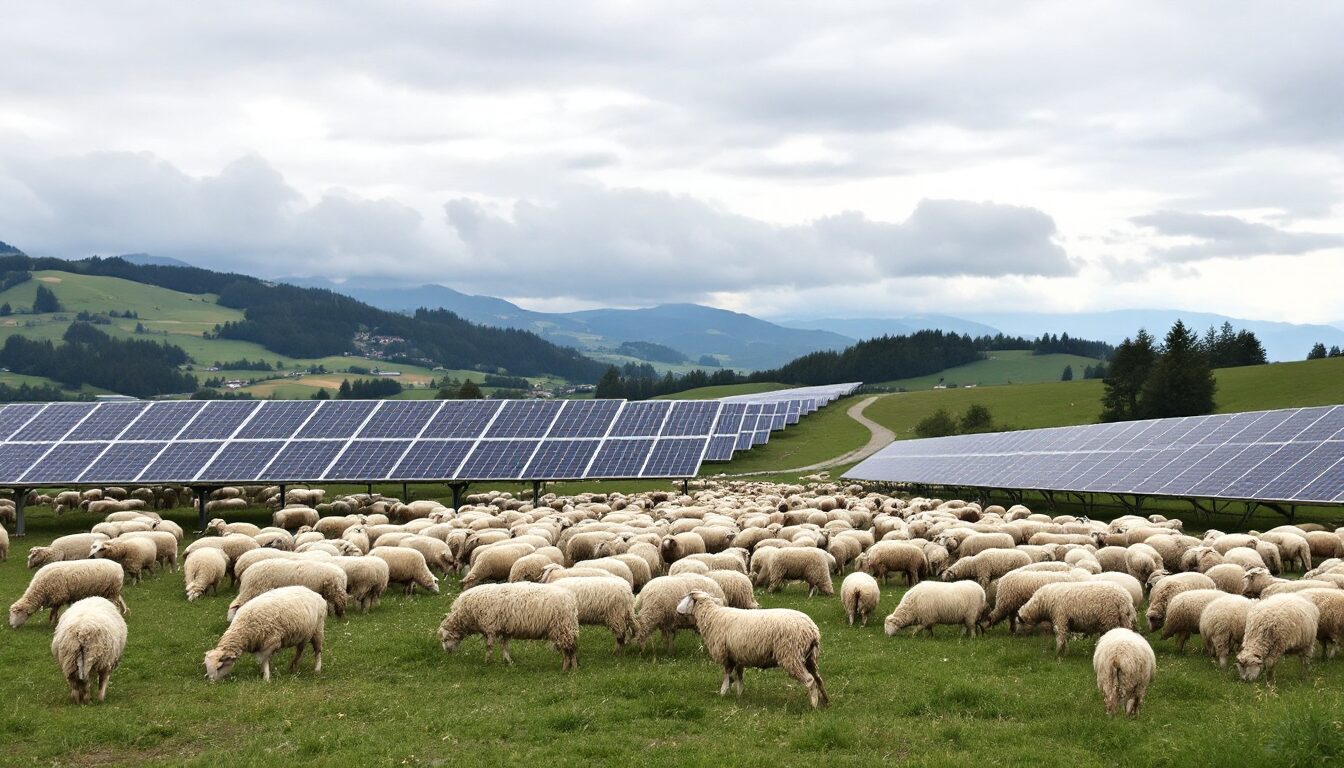
In the Jura, an innovative agrivoltaic project is emerging, combining sheep farming and solar energy production on agricultural land. This is sure to delight farmers looking for solutions to optimize their yields while preserving the environment. Sheep grazing peacefully under solar panels could very well revolutionize agricultural practices, but this initiative has raised concerns among environmental advocates. How can this coexistence between nature and technology be realized sustainably and beneficially for all? Its exploration promises to reveal an unprecedented synergy that could serve as an example for other regions.
- The agrivoltaic project in the Jura
- The benefits of agrivoltaics for agriculture
- The concerns of environmental advocates
- The regulations and safeguards of agrivoltaics
- FAQ: Clarifications on agrivoltaics
The agrivoltaic project in the Jura
In a context where the climate crisis is taking center stage, agrivoltaics presents itself as an attractive response for agricultural sustainability. This project in the Jura, which will affect the municipalities of Arbois and Abergement-le-Grand, is the result of a collaboration between Florian Lhéritier, a recognized sheep breeder, and the company Corsica Sole, an expert in solar energy. The idea of grazing sheep under solar panels is not new, as it was conceptualized as early as 2019. Today, the moment is very close to bringing this ambitious project to life, which could start in 2026.
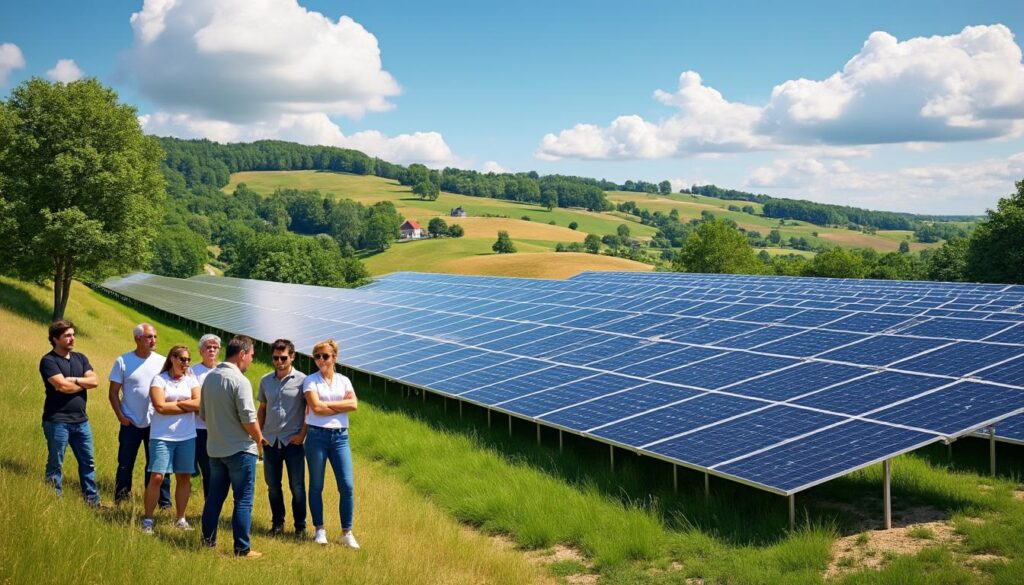
The project spans about ten hectares and is based on simple but effective principles. Here are some key points that characterize it:
- Utilization of plots with low yields to maximize energy efficiency.
- Creation of shaded areas for the sheep, helping to reduce thermal stress in summer.
- Improvement of grass quality due to the shading effect of the panels.
In terms of production, the facility installed at Labergement-le-Grand promises a power output of 11 megawatts peak, while in Arbois, a production of approximately 20,000 MWh/year is expected. These figures demonstrate a significant energy potential. But for Florian Lhéritier, beyond the simple production of energy, it is a matter of survival for his agricultural operation.
| Location | Total Area (Ha) | Area Dedicated to Panels (Ha) | Estimated Energy Production (MWh/year) |
|---|---|---|---|
| Labergement-le-Grand | 15 | 3.4 | 11,000 |
| Arbois | 20 | 6 | 20,000 |
A sustainable practice with multiple benefits
The choice of this agrivoltaic model is based on several solid arguments. First of all, it secures the dietary regimen of the sheep, which is a crucial issue in the context of climate change. By limiting the stress caused by heat, sheep can feed without requiring additional fodder, making the farm more resilient.
Moreover, this mode of energy production aims to respect biodiversity. By allowing sheep to graze, we encourage the maintenance of meadows and thus the vegetation, thereby fostering the local ecosystem. It is an eco-innovation that could inspire other agricultural practices worldwide!
The benefits of agrivoltaics for agriculture
The benefits of this fusion between agriculture and renewable energy are multiple and touch on various aspects of agricultural life. This approach allows for the combination of both food and energy production while preserving the environment. Thus, notable advantages emerge:
- 🌱 Optimization of agricultural land: By utilizing less productive land, we avoid encroaching on rich agricultural zones.
- ☀️ Improvement of yields: The panels act as a parachute for vegetation, helping to retain moisture and mitigate thermal impacts.
- 🔒 Herd security: The fences surrounding agrivoltaic plots help protect the herd from predators.
This trend towards agrivoltaics is strengthening. Other regions in France are starting to show interest, and similar projects are emerging. However, each of these projects must be carefully studied to avoid downsides.
Impacts on livestock and biodiversity
Another interesting aspect is the positive impact on biological diversity. Indeed, grazing grass under solar panels contributes to diversifying plant species. This not only helps maintain a rich ecosystem but also increases the population of pollinating insects, which is often a concern in intensive agriculture.
| Aspect | Positive Impact |
|---|---|
| Agricultural land | Optimal use of less productive land |
| Livestock | Improvement of forage production without external input |
| Biodiversity | Encouragement of pollinators and wildlife |
The concerns of environmental advocates
Despite the apparent advantages, the project has raised some resistance. Environmental advocates, such as Jura Nature Environnement, express legitimate concerns. Their main point of worry lies in the risk of prioritizing solar panels at the expense of our fertile agricultural lands.
They also fear that by focusing on energy production, farms may neglect traditional cropping and livestock practices. Indeed, the temptation may be great for a farmer attracted by immediate profit to abandon certain crops to focus on solar energy. But at what cost?
The fight for the preservation of agricultural lands
Nature enthusiasts fear that projects like this will take root in previously cultivated areas. Victor Dams of Jura Nature Environnement emphasizes the importance of not sacrificing our lands for quick solutions. He highlights that priorities should clearly focus on the urbanization of solar panels on buildings and parking lots, rather than on agricultural lands.
To address these concerns, Corsica Sole defends itself by specifying that the choice of plots was made with consideration for their low yields. Therefore, these lands would not detract from agriculture in the region.
| Concern | Project Response |
|---|---|
| Impact on arable land | Low-yield plots chosen |
| Development at the expense of agriculture | Focus on synergy between agriculture and energy |
| Overconsumption of natural resources | Promotion of a sustainably managed approach |
The regulations and safeguards of agrivoltaics
In light of concerns, the State has taken measures to frame this type of project. Recently enacted laws include provisions stipulating that the installation of solar panels in meadows must contribute to maintaining or developing agricultural production.
Starting in 2023, the government has established safeguards to ensure that each agrivoltaic project respects a certain ethics. Departments must ensure the preservation of the food sovereignty of their territories while promoting green infrastructure. This legal framework reinforces the commitment of companies to sustainable agriculture and environmentally respectful practices.
Commitment from local stakeholders
Local stakeholders are also showing their willingness to adopt a balanced approach to the development of renewable energy. The Jura prefecture has set up a public inquiry to allow citizens to express their opinions regarding this project before the final authorization is completed.
In summary, every decision made in the quest for green energy must be done in a framework of transparency and respect for existing agricultural lands. This concerns not only the future of farmers but also that of future generations.
FAQ: Clarifications on agrivoltaics
To complete this article, some frequently asked questions about the topic of agrivoltaics deserve clarification:
Q1: What is the impact of agrivoltaics on biodiversity?
Agrivoltaics helps maintain vegetation, which promotes biodiversity and supports the population of pollinating insects.
Q2: Are sheep the only animals that can graze under solar panels?
No, other animals like goats can also benefit from this method, depending on the environment and the needs of each farm.
Q3: Does agrivoltaics harm agricultural production?
When well managed, agrivoltaics can support agricultural production while generating energy without harming crops.
Q4: What is the future of agrivoltaics in France?
With adequate regulations, agrivoltaics has enormous potential to develop and gain popularity in France.
Q5: What role do citizens play in agrivoltaic projects?
Citizens can express their opinions during public inquiries, thereby contributing to shaping projects according to local needs.
In the Jura, the agrivoltaic project thus demonstrates a promising yet complex future, where innovation and environmental preservation must coexist for the benefit of all.